
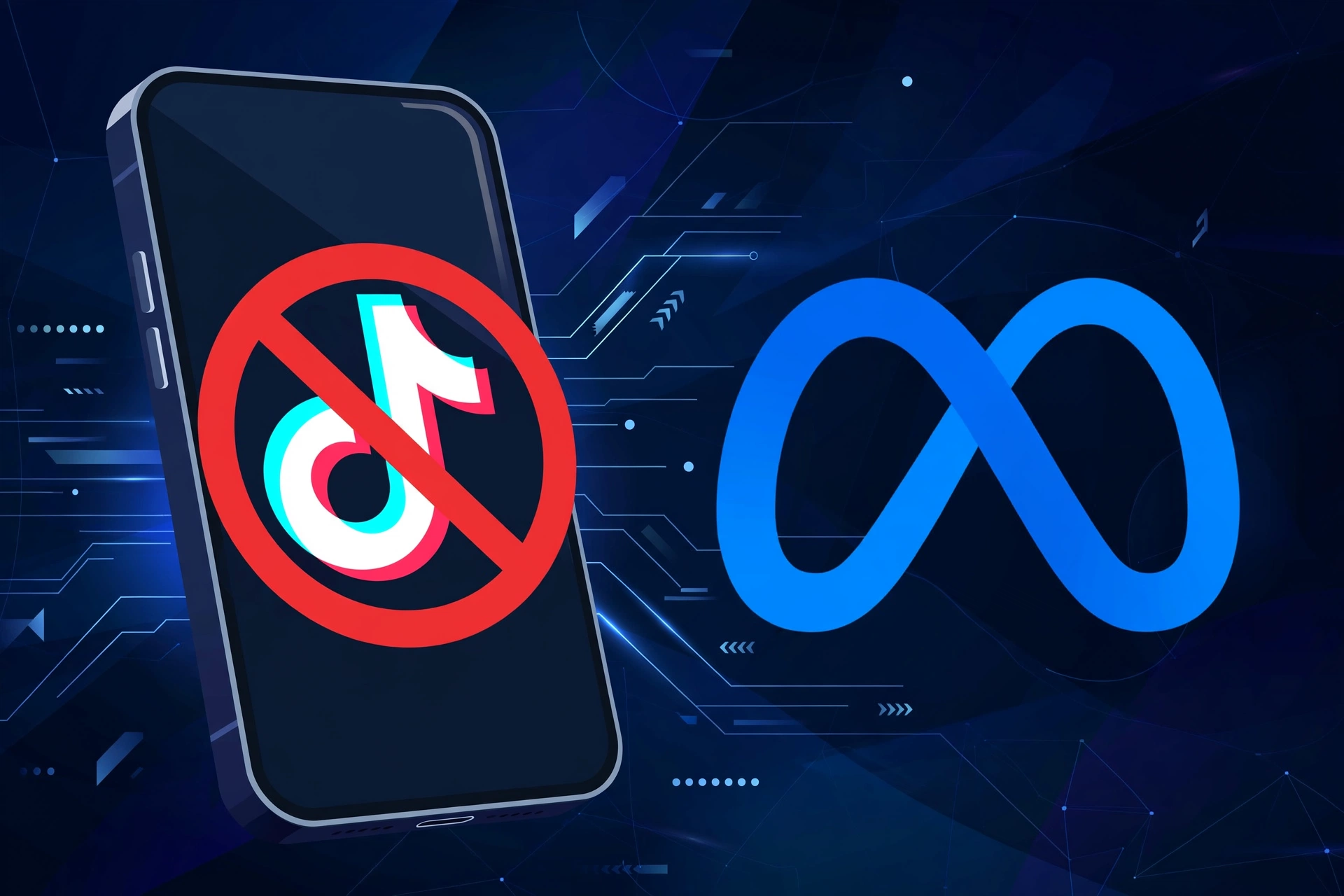
Meta Bans TikTok Ads in US: What It Means for Advertisers
Meta has banned advertisements from TikTok and its parent company ByteDance across its platforms in the United States and six other countries, in a major escalation of the rivalry between the two tech giants.
The ban, first reported by Bloomberg and confirmed by a Meta spokesperson on Thursday, October 8, 2026, took effect immediately.
Which Countries Are Affected?
Meta is enforcing the ban in seven countries:
- United States
- Canada
- Egypt
- Indonesia
- Japan
- Thailand
- Vietnam
What Exactly Is Banned?
The restriction covers more than just ads run directly by TikTok. According to Meta, the ban also extends to third-party advertisers running campaigns that link to TikTok and other ByteDance properties in those seven countries.
In other words, brands can no longer pay Meta to show Facebook or Instagram ads that send users to TikTok — whether it’s a creator partnership, a campaign landing on a TikTok profile, or any other ByteDance destination.
Why Did Meta Ban TikTok Ads?
Meta spokesperson Chris Sgro framed the decision as standard competitive practice:
“We don’t have to run ads from a competitor whose goal is to pull people off our apps. Declining promotional services to a competitor is a normal business practice across industries.”
Industry analysts point to two likely drivers behind the move: competitive self-interest — TikTok is one of Meta’s fiercest rivals for user attention, creators, and ad dollars — and an escalating dispute over child safety.
Meta has been publicly pressuring TikTok and YouTube to adopt stronger protections for minors, following its own settlement of up to $18 billion with US states in August 2026 over social media harms to children. That settlement included daily usage limits for teens and restrictions on nighttime use of Facebook and Instagram.
TikTok and ByteDance did not immediately respond to requests for comment on Meta’s move.
How Advertisers Are Reacting
The abrupt policy change caught many marketers off guard. Media buyers told Adweek the ban could hobble creator campaigns that rely on sending audiences from Meta’s platforms to TikTok partnerships.
The broader takeaway for advertisers: don’t depend on a single platform. Diversifying ad spend across multiple networks is now more important than ever.
What Should Advertisers Do Now?
- Audit your campaigns: Check whether any active Meta ads link to TikTok or ByteDance properties in the seven affected countries — they will be blocked.
- Reroute traffic: Send ad clicks to your own website or landing pages instead of TikTok profiles.
- Diversify platforms: Spread budget across Google, TikTok’s own ads platform, and other networks so one policy change can’t break your funnel.
- Watch for retaliation: Platform rivalries cut both ways — TikTok already restricts links that open other social media apps directly.
FAQs
When did Meta ban TikTok ads?
Meta began enforcing the ban on Thursday, October 8, 2026, effective immediately in the US, Canada, Egypt, Indonesia, Japan, Thailand, and Vietnam.
Does the ban affect third-party advertisers?
Yes. The ban extends to third-party advertisers running campaigns on Meta’s platforms that link to TikTok or other ByteDance properties in the affected countries.
Why did Meta ban TikTok ads?
Meta says it has no obligation to run a competitor’s ads. Analysts also point to competition for users and ad revenue, plus an ongoing dispute over child safety standards.
Did TikTok respond to the ban?
TikTok and ByteDance did not immediately respond to requests for comment.
Wrapping Up
Meta’s TikTok ad ban is the latest flashpoint in the battle between two of the world’s biggest social platforms. For advertisers, the message is clear: build campaigns that don’t depend on any single platform’s goodwill — because that goodwill can disappear overnight.