TikTok U.S. Ownership Deal: What Is Happening & Why It Matters
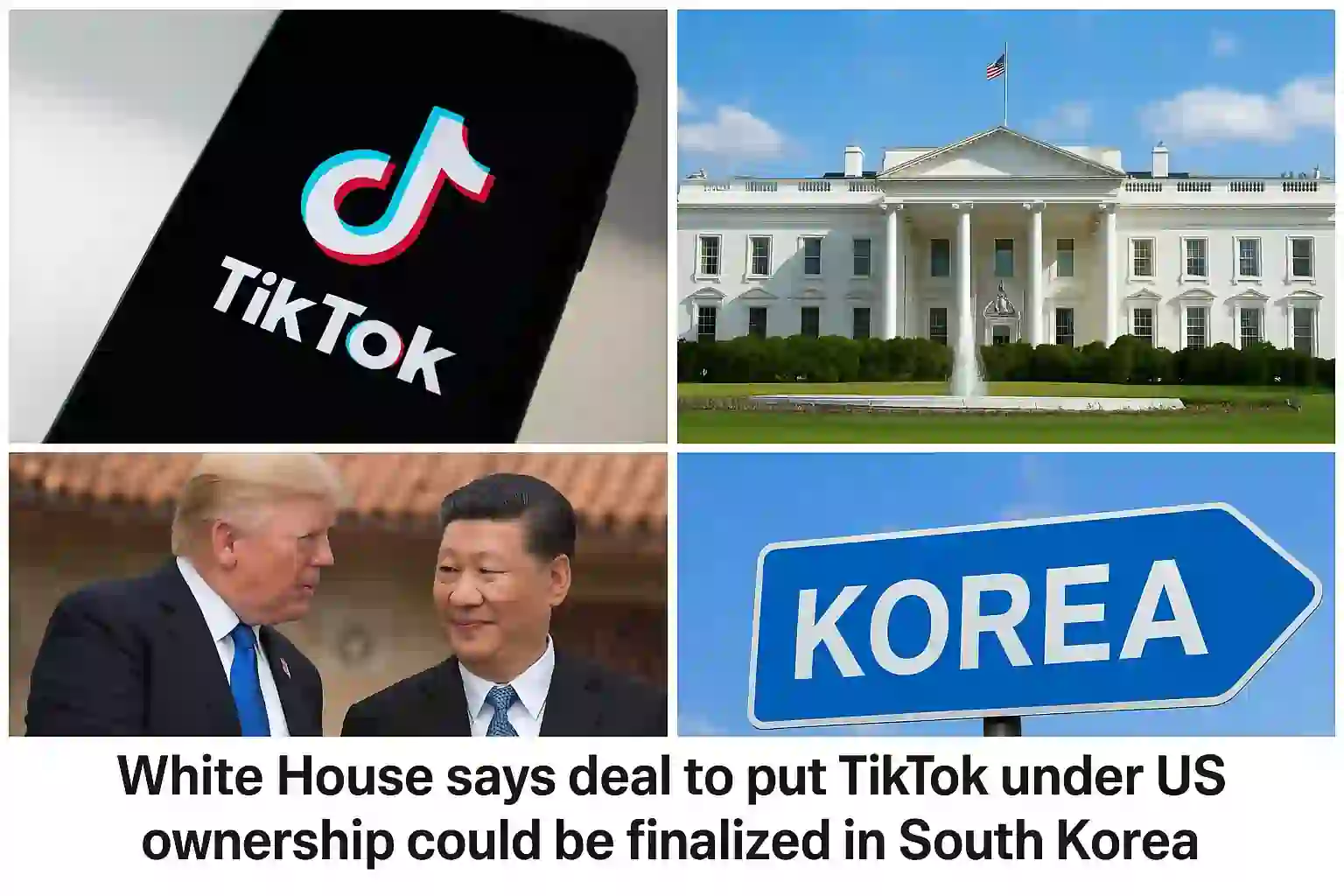
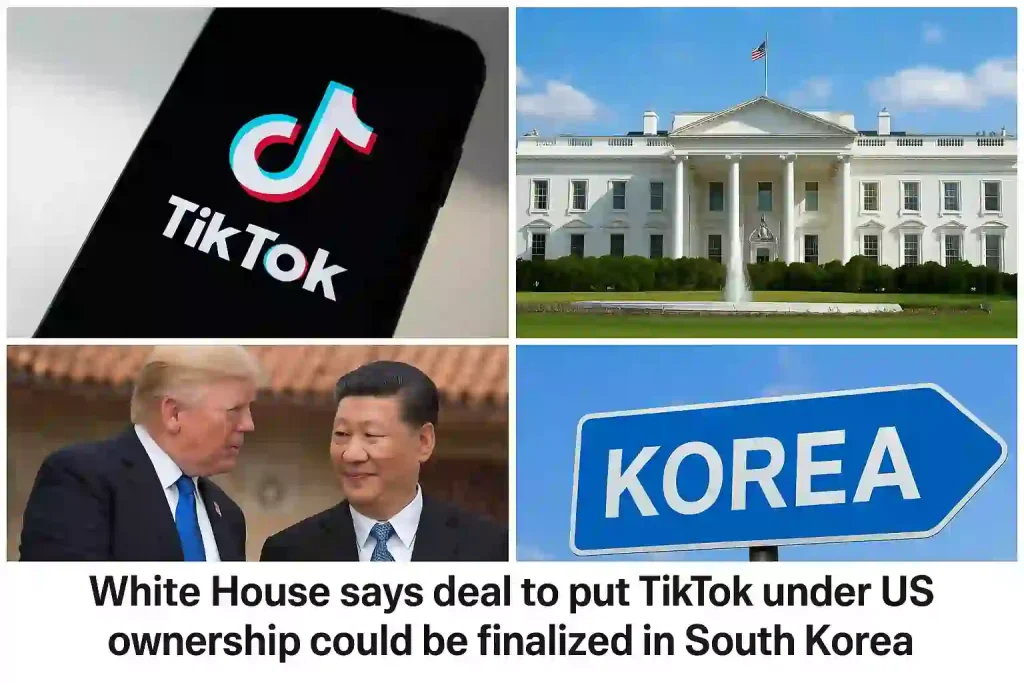
The White House has announced that a long-standing deal to transfer TikTok’s U.S. operations into American ownership could be finalized in South Korea this week.
Here’s a full overview of what’s going on, the background, the stakes for national security, and how this might impact users, tech firms, and regulators in the coming months.
1. What’s the deal?
According to reports, U.S. Treasury Secretary Scott Bessent told CBS’s Face the Nation that the agreement between the U.S. government, China’s ByteDance (TikTok’s parent), and U.S. investors may be “consummated … in Korea this Thursday.
In essence:
- TikTok’s U.S. operations would be spun off or transferred to an American-led ownership structure.
- The arrangement would hopefully meet the requirements of the legislation that threatened to ban TikTok in the U.S. if divestiture did not occur.
- The announcement of finalisation in South Korea ties into diplomatic talks during Donald Trump’s visit
2. The background: Why now?
National security and data concerns
The U.S. government has long expressed concern that ByteDance, as a Chinese company, might allow the Chinese government access to U.S. user data or influence content on TikTok.
Legislation and enforcement pressure
In April 2024, the U.S. Congress passed the Protecting Americans from Foreign Adversary Controlled Applications Act, which requires divestiture of certain “foreign adversary-controlled applications” (including TikTok) or a ban.
Executive action and path to settlement
On 25 September 2025, President Trump signed an executive order laying out that the U.S. deal would comply with the law.
Now, after months of negotiations, the announcement suggests that a final agreement may be within days.
3. Key terms & stakeholders
- Value and structure: The new U.S. entity is estimated to be worth around US $14 billion, far less than ByteDance’s overall valuation.
- Participants: American investors likely include major tech firms (e.g., Oracle Corporation) and private equity. Oracle is reported to become the “trusted security provider” for the U.S. version of TikTok.
- Board & control: According to The Guardian, the U.S. version would be controlled by an American-dominated board focusing on cybersecurity and national-security credentials.
- Chinese involvement: While divestiture is required, ByteDance may retain a minority stake or certain connections — this remains a point of contention.
4. Why South Korea?
The choice of South Korea as the venue for finalising the deal likely reflects the diplomatic context:
- Trump’s visit to South Korea is tied to broader trade and security talks, offering a platform for a high-profile diplomatic announcement.
- Finalising the deal abroad underscores its international dimensions and may reduce domestic political friction.
- South Korea’s role positions it as a strategic partner in U.S.-Asia tech and security frameworks.
5. What’s still unresolved?
Despite the nearing agreement, several critical questions remain:
- Algorithm control: Who ultimately controls TikTok’s recommendation algorithm? U.S. officials say the U.S. version must be separate from Chinese influence, but evidence of full Chinese exit is unclear.
- Data sovereignty: Will U.S. user data be fully isolated from ByteDance and China?
- Legal and constitutional concerns: Some critics argue forcing a divestment might raise First Amendment and due-process issues.
- Operational continuity: Will the user experience change? Will U.S. creators see disruptions?
- Timing and enforcement: When will the transition complete, and what happens if China or other parties stall?
6. Impact & significance
For TikTok users & creators
- If the deal goes through, U.S. users may see improved assurances on data security and compliance.
- U.S. creators may gain increased stability (fewer shutdown risks) but may face new governance or moderation rules under the new ownership.
For tech industry
- Sets precedent: A major Chinese-owned app being spun off to American control may influence future transactions and tech geopolitics.
- Raises cost & complexity: Firms operating globally will face trans-national regulatory risk, requiring layered governance.
For U.S.-China relations
- The deal is not just about an app: It signals how the U.S. will manage Chinese tech access and influence.
- It may reduce one point of bilateral tension — but it also deepens tech decoupling.
For U.S. policy & regulation
- The deal may shape how the U.S. treats foreign adversary-controlled apps in the future.
- Regulatory frameworks may evolve: The border between “global platform” and “national asset” is increasingly blurry.
7. What to watch next
- Official signing: Will there be a formal ceremony, and what will be the precise terms made public?
- Congressional / court oversight: Will lawmakers ask for details of how data flows and algorithm control will work?
- China’s reaction: Will Beijing approve the deal, object to terms, or leverage it for other concessions?
- Implementation milestones: Where will U.S. TikTok host its servers? How will creator contracts, ad revenue sharing, and algorithms change?
- Impact on other countries: Will other nations follow suit with similar demands from foreign-owned apps?
8. Why this matters for you
If you manage a website, create digital content, or are active on social platforms, this deal could affect:
- Platform stability: If TikTok’s U.S. operations gain clearer ownership, fewer risks of sudden banning or removal.
- Ad revenue & monetisation: Ownership changes might shift revenue splits or advertiser confidence.
- Data & algorithm transparency: New governance could lead to more transparency (or more restrictions) in how content is recommended.
- Global tech strategy: For content creators targeting U.S. audiences from abroad, changes in policy might affect cross-border access or moderation.
✅ Final Thoughts
The announcement that TikTok’s U.S. ownership deal may be finalised in South Korea is a major turning point in the intersection of tech, national security, and global business. While the framework appears close, the real question now is how this will be implemented and what oversight mechanisms will ensure that the promised safeguards are actually delivered.
For creators, users and digital businesses, staying informed about the details is essential — because the terms of this deal might well define the future of one of the world’s most influential apps.